

Ockbrook School Heritage Blog
Introducing the Ockbrook School Heritage Blog
Thanks to generous funding from the National Lottery Heritage Fund (July 2025 – July 2026) our ‘Saving Ockbrook’s Heritage’ Project helped to preserve and celebrate the rich heritage of Ockbrook School.
We were able to catalogue historic items such as photographs and records, and capture memories and stories from former students and staff.
This blog shares some of these discoveries, along with behind-the-scenes insights into how we recorded them.
A message from Gordon, our Heritage Officer
The end of July 2026 sadly marked the conclusion of our ‘Saving Ockbrook’s Heritage’ Project.
For the past year, I have been gathering artefacts and stories from the former School. I’d like to thank everyone who shared their anecdotes and donated items. You helped us build a much more complete picture of school life here, and I’ve met some amazing people who have shared their memories.
Our Talks and Tour events were a great success, opening up the School to over 200 people: a mix of former pupils, former staff, and interested locals. These events allowed people to relive their school days and get a peek at what life was like for generations of schoolchildren.

The story continues... online
The end of the Project does not mark the end of our wish to preserve all our discoveries.
Our team of Heritage Volunteers have been working hard to catalogue items and form the basis of a museum-style collection.
Their work will continue, and our digital collection is now available online!
An unusual memorial
One of the most extraordinary items in the former main school building is a carved sandstone and marble memorial to Charles John Rumball Hearsey, a former pupil. How did this end up in a former Girls’ School?
Further investigation revealed it predates the Girls’ School and is in fact one of the last few visible remains of Ockbrook Boys’ School, which operated from the 1820s to 1915.
Charles Hearsey was a pupil at the school during the 1860s and 1870s. He even appears in the oldest photograph available of any of the Moravian Schools in Ockbrook.
After finishing his studies at Ockbrook, Charles Hearsey joined the army and gained a commission as a Lieutenant in the 9th Lancers, a cavalry regiment with a long history linked to Derby.
The regiment was deployed to Afghanistan during the Second Afghan War, where they saw plenty of action. This included the Battle of Killa Kazi on 11 December 1879, where 170 men of the Lancers took part in a doomed charge against an estimated force of 10,000 Afghan infantry. They suffered heavy losses, with 18 officers and men killed and a further 10 wounded. Charles Hearsey was amongst those killed.

Following his death, former pupils paid for a memorial to be erected in the school in Charles’ name.
It is currently the only memorial in the school and one of the only visible links to the history of the main building as the former Boys’ School before the girls moved in during 1915.
Pictured: Ockbrook Boys’ School pupils in 1868.
Charles Hearsey is third from the left on the back row

Heritage Celebration Success
On Saturday 20th June, we celebrated our year-long ‘Saving Ockbrook’s Heritage’ Project with a celebration event in Birtill Hall.
We were joined by around 100 people, who enjoyed displays of the many heritage items we have collected from the school, including old photographs and oral histories from former pupils.
Thank you to everyone who attended this special event.


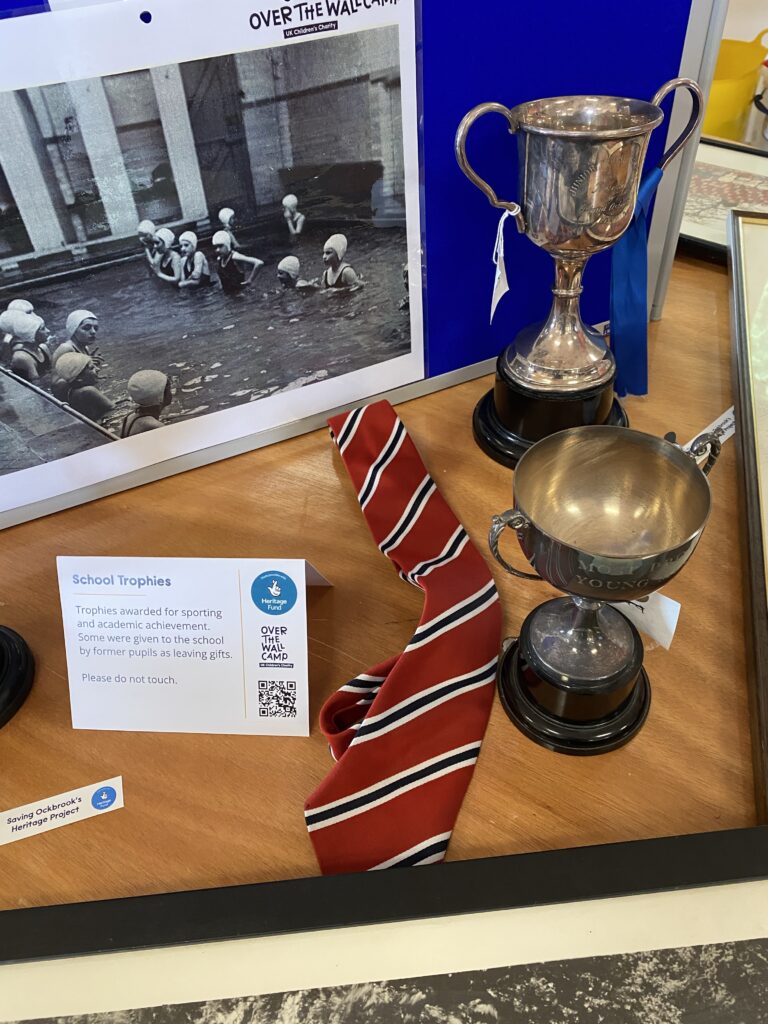
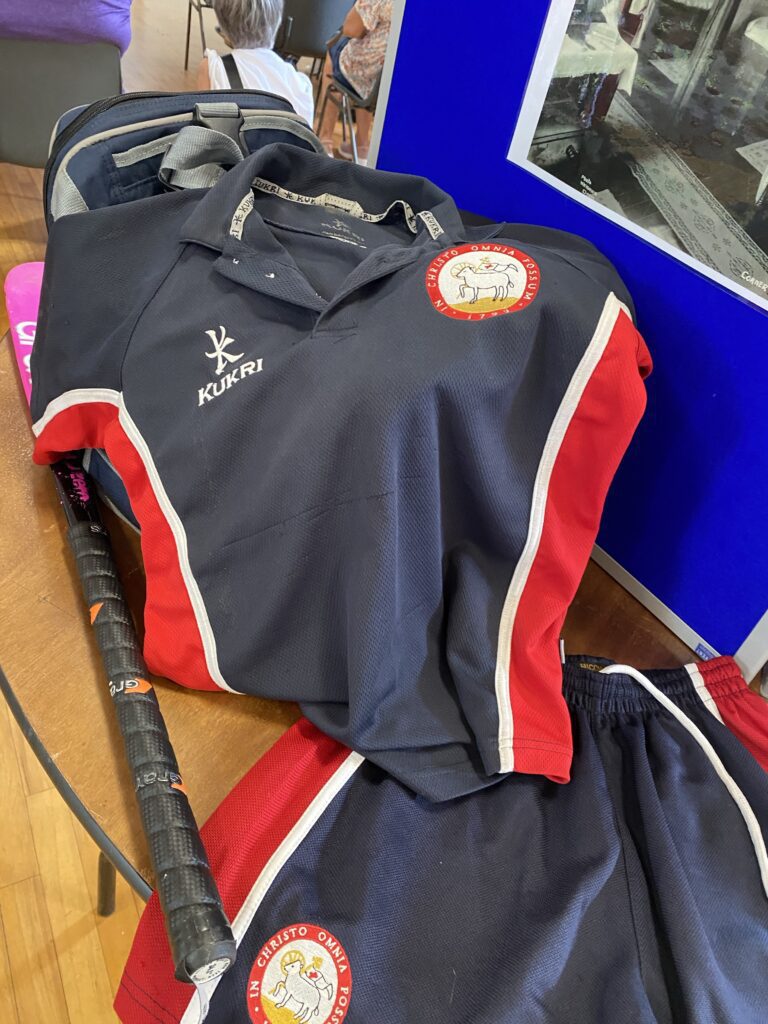


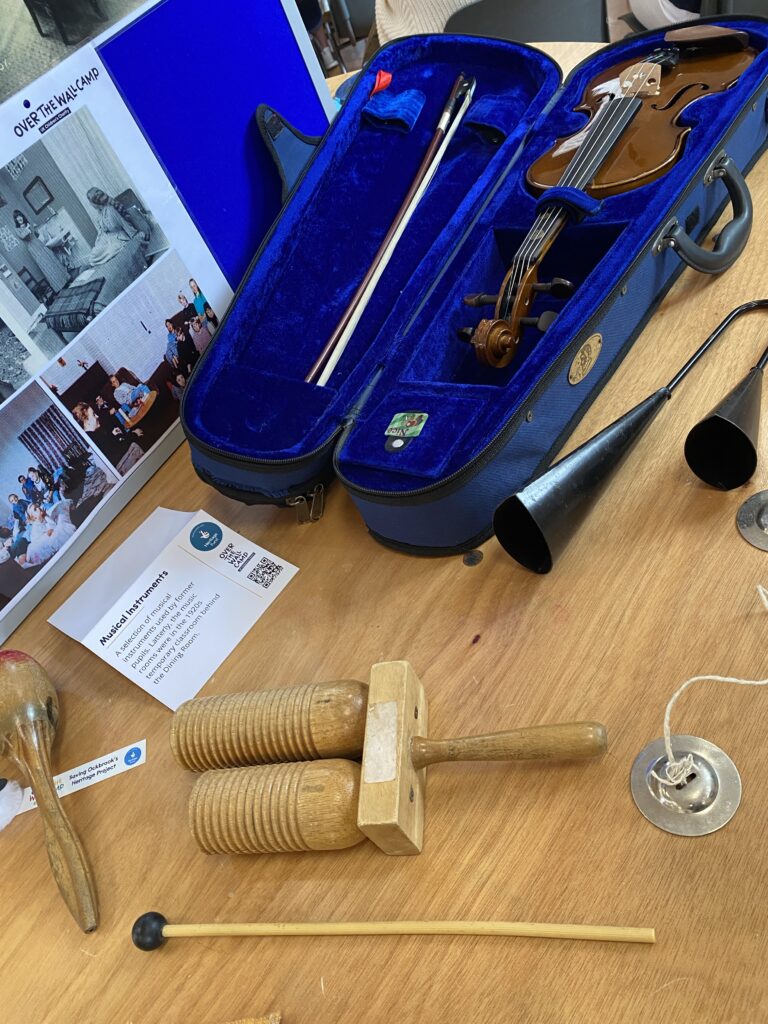


Heritage Information Displays
Our Heritage Information Displays include some of the fascinating history of Ockbrook School and its buildings, as well as school anecdotes and memories from former pupils.

The Birtill Hall Steps
We have delved into how a set of steps at the front of Birtill Hall reveals how the school facilities were adapted to changing requirements.
It started with an old photograph of ‘The New Hall’, published in a leaflet about the school from the late 1960s or 1970s. In the photo, the steps leading down from the main doors are different to how they are today.
When the hall was first built, the steps led straight down into the old playground/netball courts.
From speaking with former pupils and staff, we know they were very steep. There was a small seating area to the left with a bench, and a decorative planter, which was a bit of a sun trap. A flower bed with a small tree was also planted.
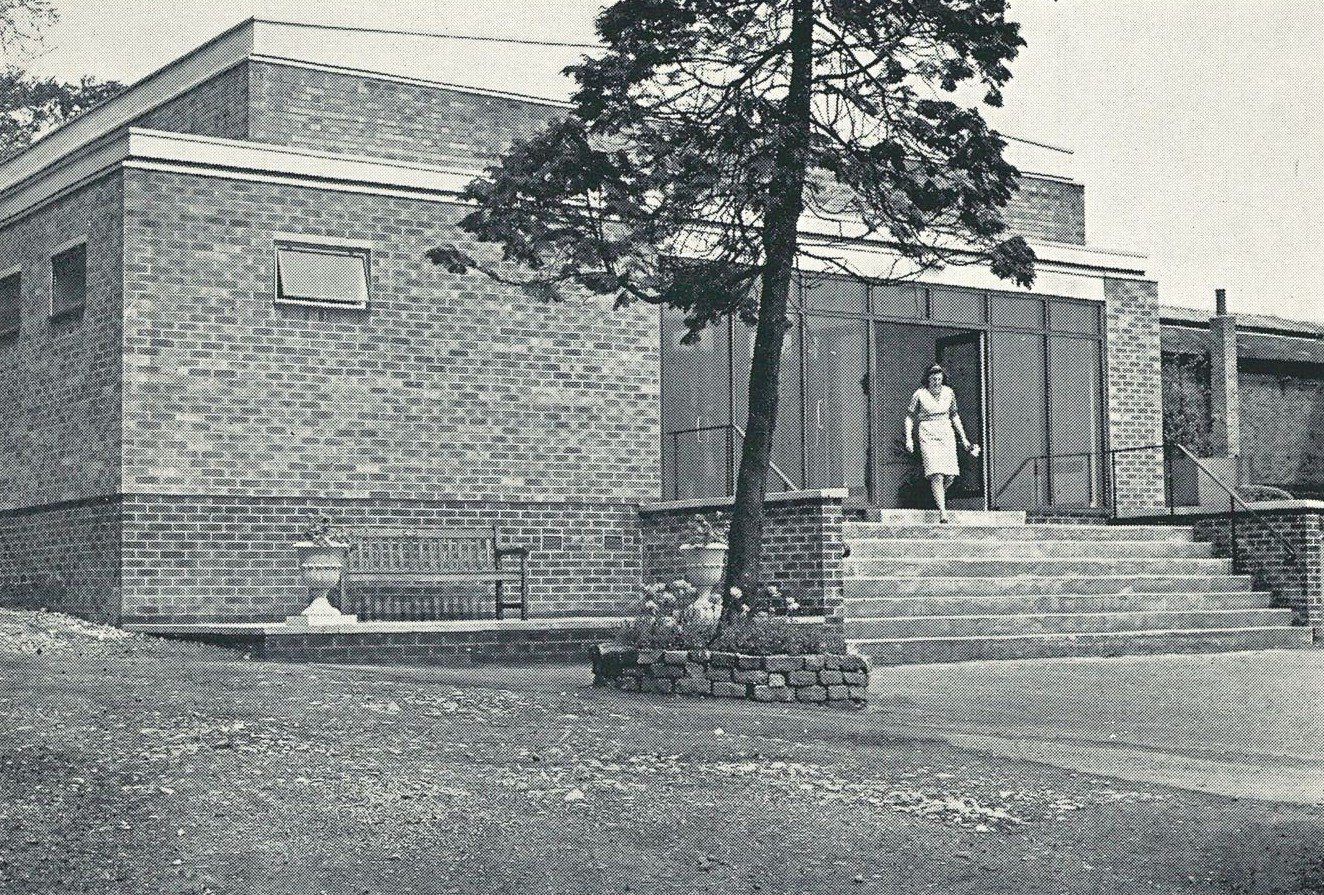

The modern steps into Birtill Hall have been drastically altered. They now climb up the side of the building at 90 degrees to the original steps.
However, small clues to the original steps remain for anyone looking closely. For example, the front side of the very bottom step is still visible at the base of the new wall. There is also a step pattern in another part of the wall.
Former staff members have explained that the steps were reworked because they were considered too dangerous due to their steepness.
All this shows how a building can undergo major changes over time but still leave clues to its original form.
'Memories from the Classroom' Success
On a misty morning back in March 2026, we hosted a day for former pupils and staff to come and share their memories of the school with us.
Former pupils had the opportunity to reunite with old school friends. They also shared their memories of attending Ockbrook School including many funny anecdotes and informative stories.
Talking Double Duck
Even the most mundane looking items we find on site here at Ockbrook School can have a story behind them.
It all started with the discovery of 5 rubber ducks, each with a handwritten name on the bottom of them.
We initially thought there may have been some illicit duck racing going on the swimming pool perhaps but from speaking with former pupils, we discovered there were used in Computer Science lessons.
They were used for a coding process called ‘Rubber Duck Debugging’ to find errors in computer code. For this, the programmer explains their code, line by line, to the duck. This slows the down the reading of the code and makes any errors easier to detect. It’s a bit like proofreading by reading your work out aloud.
The ducks were given to the A-level Computer Science students by their teacher, Mrs Wakefield.
They have also all been muted, by having their squeakers removed, presumably to prevent disruptions to lessons!

The Swimming Pool
Perhaps the single most emotive aspect of the former school during our Talk and Tour events is the former swimming pool. It always brings out vivid memories from former pupils.
The history of the pool is always a little difficult to pin down. It was built in the 1880s when the site was still a boys’ school. (The girls’ school was still located in the building above the Moravian Church).
It is claimed to be the ‘oldest indoor heated school swimming pool’, but many former pupils dispute this, as they say the pool was always freezing cold. Finding ways of avoiding swimming lessons was a high priority for many!
The pool was used for school swimming lessons during term time, and by members of the local community during school holidays. It was boarded over in the winter and the space used as a gymnasium.
“Swimming lessons were an experience! The pool was small and not very clean. We made patterns with our feet as we walked about in the silt at the bottom, and we had to remove spiders with a net.”
~ Ann B, a former Ockbrook School pupil from the 1950s.
Originally, there was a row of wooden changing cubicles at one end of the pool, and a diving board; a risky addition given how shallow the pool was. More modern facilities were later added, including the walk-through shower, but the removal of the cubicles led to girls having to walk across to the pool wearing just swimming costumes in all weathers.
The school pool was finally closed over in late 2000 due to costs and its small size. The space was then turned into a Cinema Room.


The World’s Smallest School Emblem
When exploring the Science Block, we made an intriguing discovery: an image of the Ockbrook School emblem on what appears to be human hair.
Further research revealed its origin story. The emblem was created by Dr Chris Parmenter of the University of Nottingham with two Ockbrook School Year 11 pupils. They were visiting the university to study the effects of hair care products on hair under an electron microscope.
The hair is approximately 0.1mm wide, making it the world’s smallest school emblem The engraving – shown here at 2200 magnification – was created using an ion beam to ‘mill’ the emblem into a strand of human hair. The ions are fired at the hair, removing parts of its surface and creating the image.
It is just one example of the close partnerships Ockbrook School had with local universities.

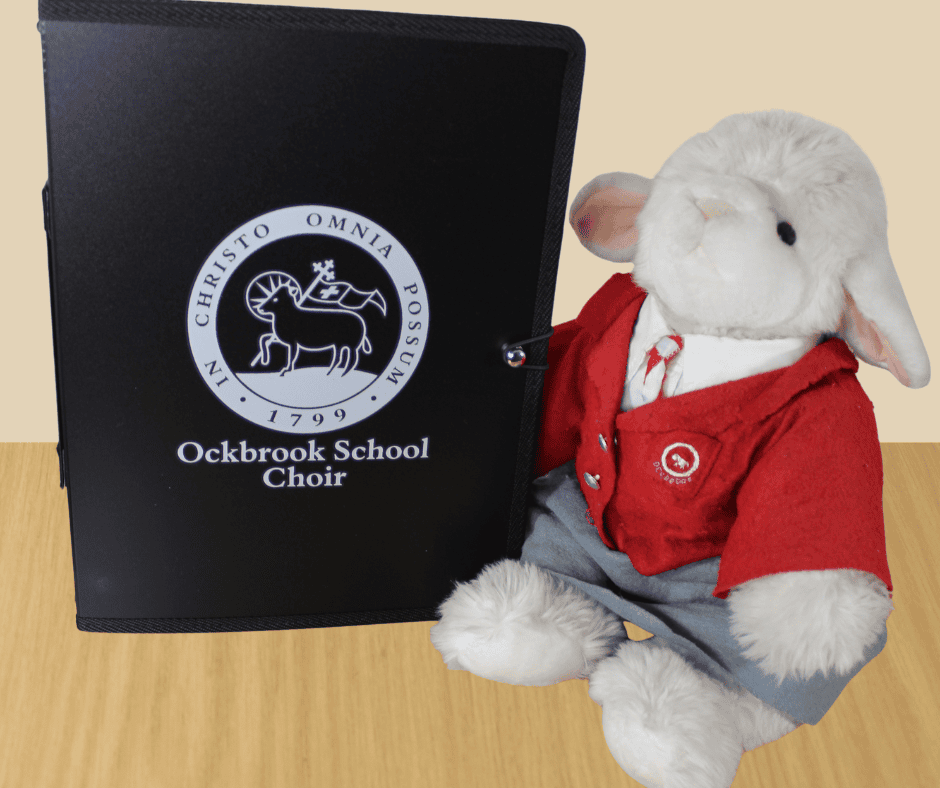
Agnus the Lamb
Agnus the Lamb was a much-loved mascot of the Ockbrook School Choir.
His name comes from the motto of the school and Moravian Church, ‘Vicit Agnus Noster Eum Sequamur’ ~ ‘Our Lamb has conquered, let us follow Him.’*
He wears a handmade Ockbrook School uniform complete with shirt, tie and blazer with hand-embroidered school emblem.
Agnus often accompanied the choir on visits to perform, including oversea trips! His last known public appearance was to Derby Cathedral when the Choir performed as part of a memorial service following the closure of the school.
Agnus is a favorite feature in our heritage displays at Ockbrook.
*Another school motto, ‘In Christo omnia possum’ ~ ‘I can do all things through Christ’, also became adapted by students to ‘In Christ all things are Possum.’


This project was made possible with The National Lottery Heritage Fund. Thanks to National Lottery players, our ‘Saving Ockbrook’s Heritage’ project aimed to bring the Ockbrook site back into use, while preserving and celebrating its fascinating heritage.